

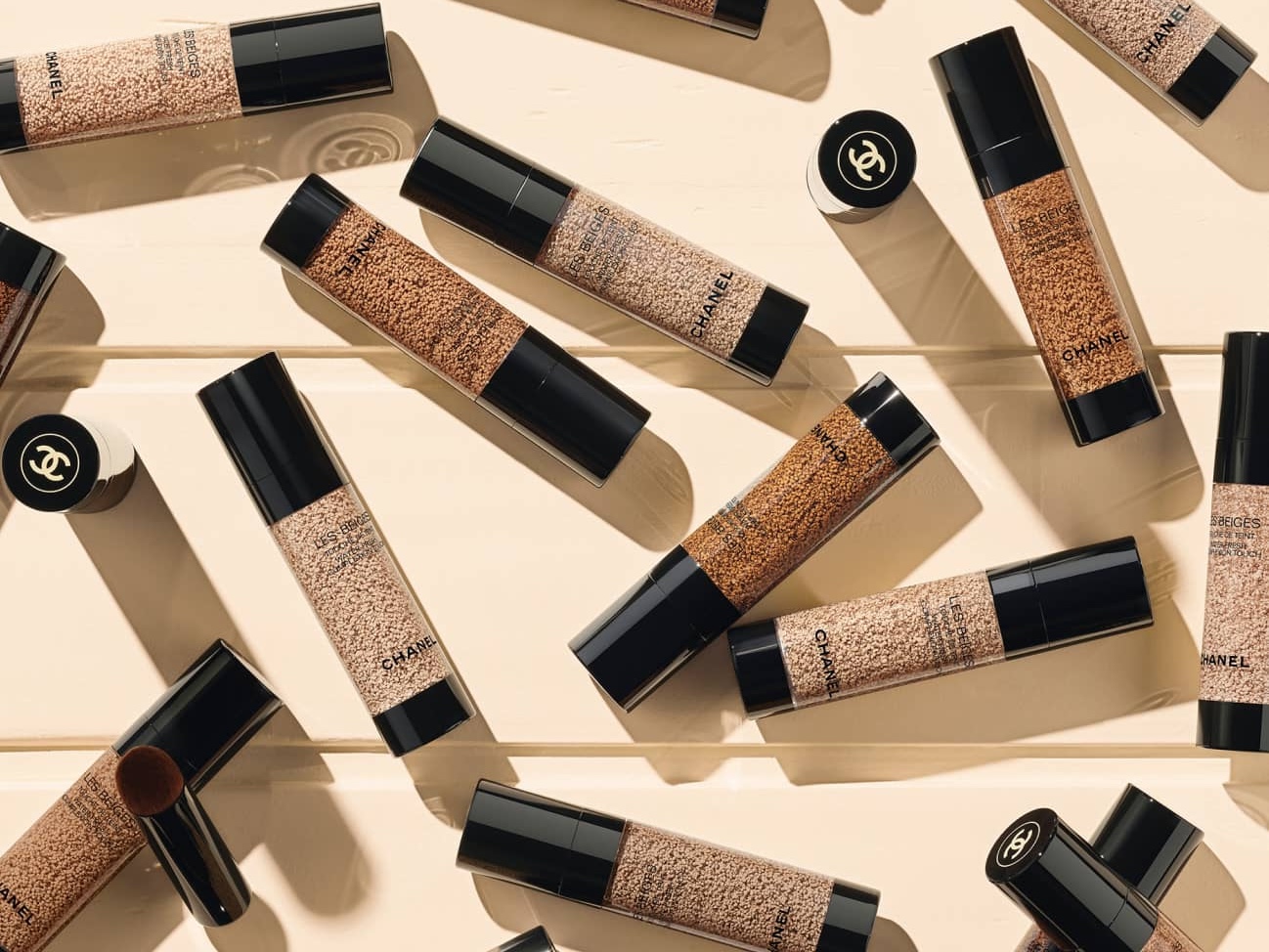
Beauty Innovation is increasingly reshaping the way cosmetic products are conceived, designed and experienced. Innovation is no longer expressed only through new textures, active ingredients, performance claims or application formats. In many products, the formulation itself has become part of the visual language.
Capsules, suspended micro-droplets and visible pigments allow consumers to see different components before they are mixed, broken or dispersed. What was traditionally hidden inside the packaging is now deliberately exposed. The structure of the formula becomes immediately visible and starts communicating even before the product touches the skin.
This shift changes the relationship between formulation, packaging and product identity. Texture, concentration and transformation can all be suggested visually, while transparent packaging becomes an active part of the experience. The formula is no longer simply contained by the pack: it contributes to the way the product is understood.
The growing presence of these formats across skincare and complexion products points to a broader direction within contemporary beauty. Technology is becoming more tangible, more intuitive and, increasingly, more visible.
Beauty Innovation Through Visible Formulation
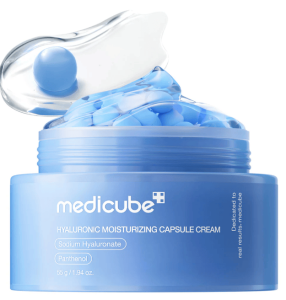
Credit: Image courtesy of Medicube – Hyaluronic Acid Capsule Cream
Not all visually distinctive formulas follow the same technical logic. Products may look similar at first glance, yet rely on very different formulation architectures and application mechanisms.
In capsule creams, for example, small beads can remain suspended within a gel base until the product is applied. During application, pressure and movement rupture the capsules, releasing their contents and blending them into the surrounding formula. The consumer does not simply apply a cream; they experience a visible transformation of the texture.
Medicube is one example of how this mechanism can become a defining element of the product. The visual presence of capsules immediately communicates a multi-component structure and suggests that part of the formulation remains separated until use.
In complexion products, suspended pigment droplets introduce another form of transformation. Micro-droplets remain visible inside a transparent or translucent serum base and only release their colour once blended onto the skin. Here, the distinction between skincare texture and makeup pigment becomes part of the product narrative.
CHANEL’s LES BEIGES Water-Fresh formats illustrate how this type of technology can combine visual impact with sensorial performance. Before application, pigment and aqueous base are visibly distinct. During application, they merge into a unified complexion result. The transformation itself becomes part of the user experience.
Water-oil formulas operate according to another visual principle. Visible droplets can communicate the coexistence of seemingly contrasting sensorial qualities: freshness and richness, lightness and nourishment. Guerlain’s Abeille Royale Youth Watery Oil Serum is an example of how suspended micro-elements can support the perception of a hybrid formula that combines different sensorial cues within the same product.
Single-dose capsules follow a different logic altogether. Rather than focusing on transformation inside the bottle, they emphasise precision, preservation and ritual. Each dose remains individually sealed until use, creating a clear gesture while visually reinforcing the idea of portion control and formula protection. Elizabeth Arden’s ceramide capsules have made this format especially recognisable within skincare.
La Prairie’s Skin Caviar Liquid Lift takes the visual language of suspended components into the premium skincare space, where visible spheres become part of the product’s identity and reinforce the perception of concentration, sophistication and technological complexity.
Across these examples, visibility is never purely decorative. It influences how consumers interpret the formulation before they even test it.
When Cosmetic Formulation and Beauty Packaging Become One System
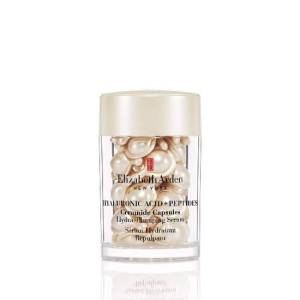
Credit: Image courtesy of Elizabeth Arden – Hyaluronic Acid + Peptides Ceramide Capsules Hydra-Plumping Serum
A visually striking formula can create immediate impact, but aesthetics alone are not enough.
When beads, droplets or suspended particles become part of the identity of a product, their behaviour must remain controlled throughout the entire product lifecycle. Capsules need to stay sufficiently and consistently distributed within the base. They must remain intact when required, break at the appropriate moment and disperse evenly during application. Pigment droplets must retain their visual separation before use and deliver a uniform result once blended.
This is where Cosmetic Formulation, Beauty Packaging and Product Design become inseparable.
If the visual effect depends on seeing the formula, transparent or partially transparent packaging becomes a critical design decision. Material selection, pack geometry, dispensing system and formula rheology must work together. A formulation designed to be observed loses much of its impact if the pack obscures its structure or compromises the consistency of the visual effect.
At the same time, making formulation technology visible also raises consumer expectations.
If capsules define the appearance of a cream, their distribution needs to remain visually coherent. If a transparent serum transforms into colour, the transformation should feel intuitive and repeatable. If separate droplets suggest the coexistence of different phases or benefits, the final performance needs to justify the visual promise.
For this reason, visible formulations represent more than an aesthetic trend. They turn formulation into a form of information.
The product begins to communicate aspects of its technology through its own physical structure rather than relying exclusively on claims, copy or graphic elements. Consumers can infer something about texture, concentration or transformation simply by looking at the product.
This is one of the most compelling developments within current Beauty Trends. Performance remains central, but the way performance is communicated is evolving. Formulation itself can become a storytelling device.
The packaging therefore has a dual role. It must protect and deliver the product effectively, while also framing the formula as a visible part of the brand experience.
From Visible Formula to Distinctive Beauty Concept
Designing a formula to be seen requires a broader perspective than creating an unusual visual effect.
Formula, packaging, gesture, product identity and consumer perception need to be considered as parts of the same system. This is where Beauty Innovation can move beyond novelty and become strategically relevant.
The objective is not to add capsules, suspended pigments or micro-droplets simply because they are visually appealing or currently visible within the market. The real opportunity lies in identifying which technology best expresses the intended product concept and what role that technology should play within the wider brand identity.
For start-ups and emerging beauty brands, this is particularly important. Differentiation needs to be built from the earliest stages of development. A strong brief should therefore address not only what type of product should be created, but how that product should look, feel, behave and communicate its value.
A visually distinctive formulation can contribute to immediate recognition, but only when it is connected to a coherent concept. Otherwise, a striking effect risks becoming interchangeable with other trend-driven executions.
As a Beauty Concept Provider, Essentia Beauty approaches product development by connecting the initial brief with concept, formula, packaging and product identity, supporting beauty projects from the first idea through to their final market expression.
Within this process, formulation innovation is considered alongside packaging research, brand differentiation and responsible design. Sustainability also needs to be treated as a concrete design discipline rather than a superficial claim. Material choices, packaging architecture, formulation requirements and product longevity need to be evaluated together, avoiding simplified narratives that can lead to greenwashing.
The same principle applies to uniqueness. A visually compelling formula can capture attention, but its real value lies in how strongly it reinforces a distinctive brand proposition.
Capsules, micro-droplets and suspended pigments reveal one of the most interesting directions in contemporary beauty product development. When formula and packaging are conceived as a unified language, what was once hidden becomes part of the experience.
The formula can begin to explain itself. It reveals its structure, anticipates the application gesture, suggests transformation and contributes directly to product identity.
In this context, making cosmetic technology visible is not simply an aesthetic choice. It becomes a way to make innovation easier to perceive, understand and remember.